

Our Partners
Coordinated by the Shoah Memorial (France), the NESHAMA Project (Network of European Youth for Holocaust Remembrance) is a project supported and funded by the European Union (through the CERV call for proposals) as part of its policy to promote Holocaust remembrance and combat antisemitism. For the first edition in 2025-2026, bringing together seven institutions, both public (Ministries of Education) and private (memorial institutions), across five European countries, NESHAMA works to build bridges between past, present, and future in order to raise awareness about the fight against antisemitism and all forms of discrimination.
5 countries united for Holocaust memory and Jewish life in Europe
NESHAMA unites 5 countries for the passing on the memory of the Holocaust and Jewish life in Europe thanks to the involvement of:
Croatia — Jasenovac Memorial Site and the Ministry of Education, Science and Sport
Germany— Langenstein-Zwieberge Memorial
France — Shoah Memorial in Paris and the Memorial to the Martyrs of the Deportation
Greece — Jewish Museum of Greece and the Ministry of Education and Religious Affairs
Poland — Auschwitz-Birkenau State Museum
Share


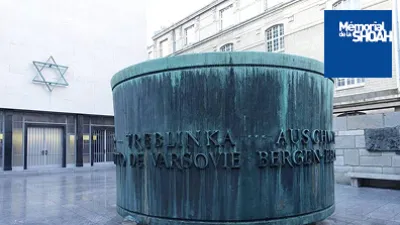

Shoah Memorial
The Shoah Memorial, an instrument of our time
The Shoah Memorial was opened to the public in January 2005, rue Geoffroy l’Asnier, on the site of the Mémorial du Martyr Juif Inconnu (Memorial to the Unknown Jewish Martyr).
Situated at this turning point of the « century of genocides », open to the new century, the new institution is intended as a bridge between the men and women who were contemporaries of the Shoah and those who did not experience this period of history, either directly or through the mediation of their parents.
Although it is a continuation of the CDJC and the Memorial to the Unknown Jewish Martyr, the Shoah Memorial is also a new phase in the transmission of the memory and the lessons of the Shoah, which so far had been essentially borne by the direct witnesses of the extermination of Jews of Europe.
Why and how should the Shoah be « taught » in the 21st century? Such issues are at the heart of the Memorial’s mission, at the heart of the work of the historians, researchers and educators who come together here to be a source of inspiration open to all, ready to welcome the new generations.
The Memorial is a resource center, the first and foremost collection of archives on the Shoah in Europe, but it is also a « museum of vigilance », designed to learn, understand and experience, because now and forever it will always be necessary to construct « a rampart against oblivion, against a rekindling of hatred and contempt for man », to quote Eric de Rothschild, President of the Memorial.
Memorial activities
To carry out its mission, the Shoah Memorial offers a selection of resources and specific services for different kinds of audiences.
The Centre de Documentation (Documentation Center) is the historical instrument for the transmission of knowledge on the Shoah and, in particular, the story of French Jews during the Second World War. Open to all, ranging from researchers to schoolchildren, the Documentation Center has a collection of over a million archives, 75,000 photos and 55,000 books. Archives originated in particular from the German administration and Gestapo in France, trials including Nuremberg and French sources such as the Commissariat Général aux questions juives (General Commission for Jewish Affairs).
The Museum: the permanent exhibition offers a chronological and thematic visit composed of twelve sequences depicting the history of Jews in France during the Shoah. The exhibition alternates between individual destinies and collective history. Based on the archives of the Documentation Center, with regular new additions, the museum is accessible to any kind of public. A special visit is designed for children over 8 years of age.
Temporary exhibitions: As a complement to the museum, temporary exhibitions are based on historic, artistic and literary themes. In contrast to the museum which focuses on the condition of Jews in France during the Second World War, temporary exhibitions are also designed to shed light on the plight of Jews in other European countries.
Pedagogical and training activities: The Shoah Memorial is pursuing and intensifying the awareness campaigns of recent years to involve younger audiences. We invite classes to visit our premises, organize slide shows and meetings in partnership with the Forum des Images (Imagery Forum) and pedagogical workshops. The training programs for adults, teachers in particular, are diversified: visits to sites of commemoration including notably Auschwitz, Summer University, specific one-day training sessions.
The auditorium can host up to 120 people for lectures, debates, conferences, presentations, slide shows and concerts. When the Memorial organizes such events elsewhere, in cooperation with other institutions more people can be accommodated.
The multimedia learning center: Situated on the mezzanine over the Memorial bookshop, the multimedia center has 12 workstations where visitors can view video testimonies, reference documents about the Shoah and consult the Shoah encyclopedia which is an original multimedia program developed by the United States Holocaust Memorial Museum (USHMM) in Washington, added to by the Paris Shoah Memorial.
The bookshop: On the ground floor of the Shoah Memorial, on the corner of the Allée des Justes and the Rue du Pont-Louis-Philippe, the bookshop specializes in the genocide of European Jews and contains a broad selection of books on Nazism, the resistance and the history and culture of the Jewish people. Over 1000 references are available, ranging from classics to the latest publications.
The Review and other publications: The publication of the « History of the Shoah Review » and a number of monographs are the visible part of the Memorial’s research activities. Created in 1946, the « History of the Shoah Review-Jewish World » (Revue d’histoire de la Shoah – Le monde juif) studies the genocide of Jews by Hitler’s Germany and the diversity of cultural reflections it inspires. It also considers other genocides of the 20th century.
Services for families of victim: The children, grandchildren and close relatives of victims of the Shoah are offered advice and assistance in their search for information, i.e. to find a relative using the lists of Jews deported from France or produce documentation for an indemnification claim.
Visits to sites of commemoration: Every year, the Memorial organizes pedagogical visits to Auschwitz-Birkenau in Poland, open to all, ranging from school groups to individuals. The Memorial also provides help and advice to organize, on request, projects to other Shoah memorial sites, in France or abroad.


Langenstein-Zwieberge Memorial
The memorial is dedicated to the more than 7.000 inmates of Langenstein-Zwieberge Concentration Camp who had to perform forced labour constructing a tunnel system designed to house an underground factory for war plane production. About 4.000 of them did not survive. Today, the memorial is an international place of remembrance, political education and historical research.
Brief history of your institution
1) Buchenwald Subcamp “Malachit”
Langenstein-Zwieberge was established in April 1944 as a subcamp of the Buchenwald Concentration Camp. The aim was to construct a tunnel system of an overall length of 13 km with an area of almost 70.000 m² for war plane production. Two major developments lead to this: the overall labour shortage in Germany since the beginning of the war and the destruction of armament factories by allied air forces since 1943. Hence, underground factories safe from allied air raids were to be built by exploiting concentration camp inmates as forced labour. The Langenstein-Zwieberge project was code-named “B2” or “Malachit” (malachite). A huge network of private construction companies was set up to plan, supervise and execute the construction of the tunnel system and the necessary infrastructure above ground such as a railway connection – and also the large camp for housing the prisoners, which was dubbed “Camp Zwieberge” (“two mountains”) after a hill with two peaks nearby.
The SS provided Concentration Camp prisoners as workforce against payment. Thus, large amounts of money were made by both the companies, paid by the German state, and the SS, paid by the companies, with prisoners not seeing a single penny.
Working conditions were extremely harsh: prisoners had to work in shifts of eight or twelve hours without breaks and without proper security equipment. Accidents leading to injuries or death were frequent. Beatings by both guards and foremen were widespread as reported by survivors. In addition to the long shifts, prisoners had to walk on foot from the camp to the construction sites and back, and had to stand several hours for roll call twice a day. This time regime resulted in insufficient sleep time. Food rations were insufficient from the beginning. As a result of these conditions, at least 175 prisoners died from Mai to December 1944. The death rate was constantly on a rise.
In Winter 1945, several Buchenwald subcamps were closed or reduced in size; the “excess prisoners” deemed no longer fit to work were sent to selected camps, Langenstein-Zwieberge being one of them. At the same time, the already insufficient food rations were reduced further. This resulted in a rapidly increasing death rate in the camp, with malnutrition being the most important cause of death. In February, more than one thousand prisoners were brought to Langenstein-Zwieberge from the dissolved large Auschwitz and Gross-Rosen camp complexes in occupied Poland. The number of prisoners in camp Zwieberge thus reached its peak with more than 5.900 in late February. The death rate exploded, leading to 1.565 dead from January to mid-April 1945. About 900 of them were buried in mass graves next to and in the camp.
Shortly before the arrival of allied troops, on 9 April 1945, 3.000 prisoners had to depart on a “Death March”, which probably only 500 survived.
US-Army troops liberated the Camp on January 12. About 1.000 of the liberated 1.400 inmates were hospitalized, about 70 of them died in hospital.
2) Memorial: Mahn- und Gedenkstätte 1949 – 1989
Since July 1945, Halberstadt and Langenstein were situated in the Soviet Zone of Occupation and later the German Democratic Republic (GDR). Monuments were erected on the sites of the mass graves and inaugurated with a mass rally on 11 September 1949. The ceremonies under the motto “Days of Fighting for peace” mark the founding of Langenstein-Zwieberge memorial, making it one of Germany’s oldest Concentration Camp memorials. A tree used for executions by the SS, dubbed “Pine of Death”, was marked with a commemorative plaque. Since then annual commemorations took place on every 2nd Sunday in September, marked in the GDR as “International Day of Commemorating the Victims of Fascism and of Fighting Fascism and Imperialist War”.
At the end of the 1960s, the burial grounds were redesigned and the memorial became “Mahn- und Gedenkstätte” (“Site of admonishing and commemoration”). The mass graves were covered with a monumental parade ground for mass events, serving the purpose of showcasing anti-fascism as one of the ideological pillars of the GDR. Mass rallies were organized on commemoration days, gathering inter alia soldiers or children organized in the Young and Thälmann pioneer organizations for oath taking ceremonies. The memorial also held contact to survivors, mostly with a communist background, and conducted research into resistance in the Concentration Camp. Over the years, additional commemoration monuments were placed on the former camp grounds. In 1976, a memorial building housing an exhibition was erected.
The unfinished tunnel system in the Thekenberge hills became a military area in the late 1970s.
3) After 1989
In 2001, a new permanent exhibition was opened in the memorial building. Since 2007, the memorial is part of the Saxony-Anhalt Memorials Foundation. Since 2011, the burial ground were redesigned and inaugurated with survivors and their relatives attending. The redesign with name plaques allows for individual remembrance. The military moved out of the tunnel in 1994, which since then is private property. The memorial has partial access for educational projects and guided tours. In 2005, a 120-metre section of the tunnel system was opened to visitors.
Link with the Holocaust/ WWII
As Germany had been declared “free of Jews” in 1943 by the national socialist leadership, no men persecuted as Jews were among the prisoners sent from Buchenwald Main Camp to Langenstein-Zwieberge in 1944. The first were brought to Langenstein-Zwieberge in February 1945. They had been forced to work in subcamps of Auschwitz, many in the Blechhammer subcamp, and Gross-Rosen before. Having survived the death marches and transports from there to Buchenwald main camp, they were transported further to Langenstein-Zwieberge. Others came from Buchenwald subcamp Niederorschel. Together with the prisoners came SS-Guards from Auschwitz.
Langenstein-Zwieberge thus became one of the places where men persecuted as Jews whom the National Socialist regime intended to exploit as forced laborers before killing them were gathered in the final stage of the war. As the SS cynically let Langenstein-Zwieberge prisoners starve to death, the racial hierarchy was no longer decisive for chances of survival in the camp. How many prisoners persecuted as Jews survived the death march is unknown.
Langenstein-Zwieberge was one of twenty projects managed by an SS-Sonderstab (Special Staff) within the SS-Construction Department, or office C of the SS Main Economic and Administrative Office. Head of the SS-Sonderstab was Obersturmführer Wilhelm Lübeck. Before being sent to Halberstadt, he had acted as head of SS-Bauabteilung in occupied Warsaw. In this position, he was responsible for bulding the Warsaw Ghetto wall, the destruction of the Warsaw Ghetto after the uprising in 1943, and the subsequent construction of Warsaw Concentration Camp. He also played a significant role in the construction of Treblinka death camp, were approximately 800.000 people were murdered. The highest-ranking SS-officer for Langenstein-Zwieberge thus was a man responsible for constructing mass murder facilities in the Holocaust.
Purpose and mission
As part of the Saxony-Anhalt Memorials Foundation, our statutory mandate is to contribute through our work to preserving and passing on knowledge about the unique crimes committed during the Nazi dictatorship. We understand ourselves as a non-partisan actor and partner of civil society. In this capacity, we contribute to the development and shaping of a democratic culture of remembrance in our federal state of Saxony-Anhalt.
Activities: Examples of 1-2 main projects for young people
Each year, young people from various types of school spends three months of their free time researching and reflecting on a topic set by family members of camp survivors. As an artistic and creative translation of this topic, they develop a theatrical performance that is presented to the public on the anniversary of the liberation.
Annually for the last four years, another group of youth explored the former camp grounds from different perspectives, taking photographs of the memorial and finding words to express their personal views. The result is presented as an exhibition of compositions of words and images, dubbed “Visual Language – Photography and Words”.
Why is your institution involved in Neshama
NESHAMA is an excellent opportunity for the Langenstein-Zwieberge Memorial to improve international relations on the level of student exchange and intensify its network with memorials throughout Europe. For youth from our small-town and rural area, it provides a unique chance both to understand the crimes of National Socialism in their European dimension and complexity as well as creating ties to youth from other European countries.
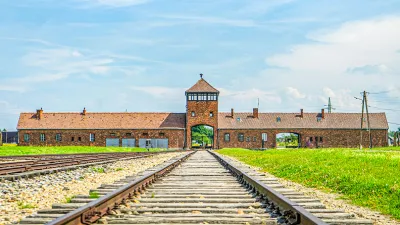

Auschwitz-Birkenau State Museum
From liberation to the opening of the Memorial
From January 17 to 21, 1945, the Auschwitz administration evacuated about 58 thousand prisoners into the depths of the Reich. At the same time, the SS were burning the camp records. On January 20, they blew up crematoria and gas chambers II and III in Birkenau. Just after the end of the evacuation, on January 23, they set fire to Kanada II, the warehouse full of property plundered from the Jews. Three days later, they blew up gas chamber and crematorium V. When Red Army troops entered the grounds of the camp on the 27th, they found about 7 thousand prisoners there, most of them sick and at the limits of physical exhaustion.
The first years of the Memorial
In April 1946, the Ministry of Culture and Art (Ministerstwo Kultury i Sztuki – MKiS) sent a group of former prisoners, led by Tadeusz Wąsowicz, to Oświęcim to protect the site of the Auschwitz camp and set up a museum there.At the beginning of 1947, Ludwik Rajewski, the head of the Department of Museums and Monuments in the MKiS, presented an organizational plan according to which the Museum would be a “historical document.”
It was planned to present the extermination of the peoples conquered by the Germans and to highlight the fact that the German atrocities were committed on a mass scale, while steering clear of “the macabre” and using only suitable visual elements. It stressed that the killing of the Jews should be presented in a special way, and that it was necessary to cooperate with the Central Committee of Jews in Poland (Centralny Komitet Żydów w Polsce – CKŻP) to establish the number of Jewish victims, broken down by country.
The exhibition was planned to consist of three parts: a general section showing the story of prisoners in the camp, an international section devoted to the wartime situations of the countries whose citizens were deported to Auschwitz, and a third section presenting the other German concentration camps. The exhibition was to be located in 12 blocks at the site of the main camp, named here in the order suggested for visitors to follow: the history of Polish-German relations (block 15); the structure and nature of the SS origins of the concentration camps, categories of prisoners, and attitudes of the SS to the prisoners (16); life, labor and death inside and outside the camp (17 and 18); the Destruction of the Jews, officially named “The Extermination of Millions,” since it would also cover the extermination of people from other groups (4); property belonging to the Jewish victims (5 and 6); the history of the camp and the resistance movement in the camp (7); the state of a block in 1940 (8) and in 1944 (9); experiments on prisoners and the life of women in Auschwitz (10); and the interior of the “Death Block” (11). Block 11 and the adjacent courtyard were to be a mausoleum. The remaining blocks were to be placed under the protection of the countries whose citizens died in Auschwitz, or to be used to display information about other Nazi camps.
In this project, Birkenau was supposed to be transformed into a kind of cemetery-park in which it was planned to erect a mausoleum on the ruins of crematorium III. A vocational school with dormitories, in turn, was to be opened in the buildings of the so-called Lagererweiterung, erected near the main camp in 1943-1944. This school would, above all, educate the orphans of former political prisoners. The sites of the sub-camps in Rajsko, Harmęże, and Pławy would be turned into farms that would generate money for the upkeep of the Museum.
On April 25, 1947, there was a conference in Oświęcim of officials from the (CKŻP), including the director of the Central Jewish Historical Commission (Centralna Żydowska Komisja Historyczna – CŻKH), Natan Blumental. The Jewish delegates conferred with the head of the Department of Museums and Monuments in the MkiS, Ludwik Rajewski, and Museum head Tadeusz Wąsowicz, on the role of Jewish institutions in setting up the Museum. After inspecting the plans for the exhibition, the Jewish delegates asked for blocks 4 and 10 to be put at the disposal of the CKŻP. This request was approved. The CKŻP representatives undertook to prepare one of the exhibits in block 4, with its installation entrusted to Jewish painters and sculptors from the Art Cooperative in Łódź.
The official opening of the Museum was held on June 14, 1947. Only part of the organizational work was completed by that date, and only a part of the planned exhibition was open to visitors.
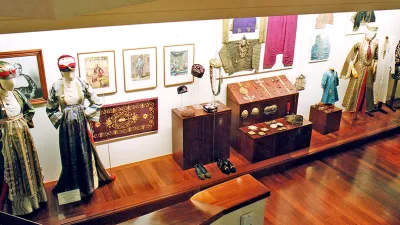

Jewish Museum of Athens
The Greek Jewish Communities before the War Before the German Occupation, more than 70.000 Jews lived in Greece. From Evros to Chania-in Ioannina, Athens, Larissa, Corfu, Florina, Chalkida, and elsewhere-26 institutionally recognized Jewish Communities were in operation. The largest of these was located in Thessaloniki, where Jews constituted a significant part of the population and of the city’s social and economic life. In addition, informal small communities existed in other towns as well, such as in Karditsa, Katerini, Soufli and Agrinio. Greek Jews had diverse traditions. The Sephardim (primarily in Thessaloniki and more broadly in Macedonia, Thrace, and other regions) had settled from Spain after 1492 and spoke a distinct dialect, Judeo-Spanish or Ladino. The Romaniotes, on the other hand, had lived in the Gree lands for centuries, at least since the Byzantine period, and possibly earlier. They spoke a distinct Greek dialect, known as Romaniote Greek.
The German Occupation and the persecutions Following Germany’s invasion of Greece in April 1941, the country was divided into occupation zones (German, Italian, and Bulgarian). The persecution of Greek Jews unfolded differently in each of the three occupation zones. The harshest case was that of Thessaloniki, which fell under the German occupation zone. From the outset, the German authorities implemented measures that directly targeted the city’s Jewish population: they confiscated goods from Jewish-owned businesses, looted sacred objects from synagogues, and imprisoned prominent members of the community. In the summer of 1942, thousands of Jewish men from Thessaloniki were forced into compulsory labor. In March 1943, the deportations began. By August 1943, approximately 45,000-50,000 Jews from Thessaloniki were transported by train to the Auschwitz-Birkenau camp and very few returned. Conditions in the Bulgarian-occupied zone were also extremely harsh. The Bulgarian occupation authorities promptly complied with the directives of the German authorities. On 3 March 1943, they arrested the Jews of Drama, Serres, Kavala, Komotini, Alexandroupoli, and Xanthi and deported them to the Treblinka extermination camp, where all were murdered immediately upon arrival. In the Italian-occupied zone (e.g. in Athens), Jews lived in relative safety during the first two years of the Occupation, as the Italian authorities did not impose anti-Jewish measures. However, when Italy surrendered in September 1943, the Germans took control and began organizing their plan to trap the Jews living in southern Greece and on the islands. In the spring and summer of 1944, mass arrests and deportations to Auschwitz-Birkenau were
carried out. Society Responses and Acts of Rescue. The fate of Greek Jews was shaped by the assistance offered or denied to them by their fellow citizens. In several regions, e.g. in Zakynthos and Volos, many local residents, municipal authorities, and resistance organizations helped save Jews by hiding them or assisting them in escaping to the mountains, areas controlled by the resistance. In other cases, however, there were instances of indifference or collaboration with the occupying forces. A significant example is Athens, where a considerable number of Jews managed to survive hiding thanks to a combination of factors. The police authorities provided them with forged identity cards, which enabled them to evade the checks of the occupation authorities. In addition, the Church, resistance organizations, and ordinary citizens offered shelter or secured escape routes for those being persecuted. Of particular importance was the stance taken by Archbishop Damaskinos, who issued a formal protest against the persecutions.
Casualty Report : Of the approximately 70,000 Jews who lived in Greece before the war, around 56,000 were murdered in extermination camps or elsewhere. The overall rate of loss reaches 80%. For some communities, the percentages were even higher. In Thessaloniki, 96% of the prewar Jewish population was killed-one of the highest rates in all of Europe.
Memory and Lessons : After the war, the survivors faced immense difficulties: destroyed homes, lost property and loss of relatives. Nevertheless, seven Jewish communities managed to reconstitute themselves in Thessaloniki, Athens, Larissa, Volos, Trikala, Ioannina, and Corfu. These communities, together with the Jewish Community of Rhodes, which became part of the Greek state following the incorporation of the Dodecanese into Greece in 1948, constitute living and active centers of Greek Jewish life preserving their traditions and contributing to the development of the Greek society.
Today, monuments, museums, and educational programs honor the memory of the victims. The Holocaust in Greece is not only Jewish history; it is part of the national history, teaching us about the dangers of racism, fanaticism, and indifference to injustice.
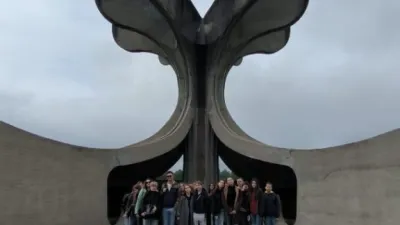

Jasenovac Memorial Site
The Jasenovac Memorial Site is a memorial and museum institution dedicated to preserving the history of the Jasenovac concentration camp system and commemorating its victims. Established in 1968 on the grounds of the former Brickworks camp, extensive museum and archival collections, research projects and educational programs have since been developed. A major renewal of the museum and educational facilities was completed in 2006.
Link with the Holocaust / WWII : Between 1941 and 1945, Jasenovac was one of the largest concentration camps run by the IDS (Independent State of Croatia) authorities, where Serbs, Jews, Roma and Croats who opposed the Ustaha regime were persecuted and murdered. The Memorial Site documents these crimes, researches camp history and preserves the memory of all victims.
Purpose and mission: The institution preserves historical evidence, protects memorial sites and mass graves, and educates the public – especially young people – about the camp’s victims. Its mission is to commemorate all victims, promote historical understanding and help prevent such crimes from repeating.
Main actions (key projects for young people): Educational Program: Developed with international partners and Croatian institutions, delivered in cooperation with the Ministry of Science, Education and Youth, which co-finances school field trips to Jasenovac.
Why the institution is involved in Neshama: The mission of the institution naturally aligns with Neshama’s goals. Through our expertise, archives and educational programs, the Jasenovac Memorial Site supports remembrance and education about antisemitism, promotes intercultural dialogue and empowers young people to uphold democratic values and counter hatred.
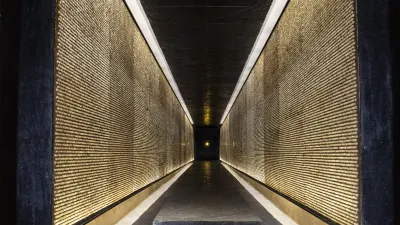
Memorial des martyrs de la Déportation
The Mémorial des Martyrs de la Déportation, on the Île de la Cité in Paris, commissioned by the association ‘Le Réseau du Souvenir’ and entrusted to the architect Georges-Henri Pingusson, was inaugurated on April 12, 1962, by General de Gaulle.
This memorial is a one-of-a-kind work that evokes several characteristic aspects of the concentration camp system: imprisonment, oppression, and the impossibility of escape. It takes visitors on a journey that encourages reflection and remembrance, around a crypt that holds the remains of an unknown deportee.
When Georges-Henri Pingusson designed this memorial in the heart of the capital, his intention was “to evoke the long ordeal of attrition, the will to exterminate and debase.” He aimed to keep alive the memory of the deportations to the Nazi camps and to allow France to pay tribute to the victims, while encouraging people in the modern world to reflect on the lessons that can be learned from it.
An educational exhibition was opened in 1975 in the upper rooms in response to the emergence of Holocaust denial and revisionist ideas.
This exhibition was renovated in the spring of 2016. The new exhibition, based on the latest historical research, enables visitors to learn about the details of the various deportations while also comparing the ways in which commemoration has evolved over time. The exhibition therefore recognizes the uniqueness of the experiences of different deportees while bringing them together in a national tribute.
Today it is officially recognized as a “Haut lieu de la mémoire nationale du ministère des Armées” (a national site of remembrance of the Ministry of the Armed Forces).
“Le Réseau du Souvenir” (The Network for Remembrance) is an association composed of survivors and families of deportees. It was created in 1952 by Paul Arrighi, a former prisoner of the Mauthausen camp, and Annette Lazard, the widow of a deportee who died in Auschwitz.
The Réseau’s missions are to preserve the memory of all those who disappeared and were murdered in the Nazi camps, to raise public awareness about the world of deportation, and to pay tribute to the victims. Among other initiatives, the association was behind the creation of the Memorial to the Martyrs of the Deportation, as well as the film “Night and Fog” (1956) by Alain Resnais and the National Day of Remembrance for the Deportation.