

Study Tour to Weimar and Buchenwald Memorial – August 17-18 2025
Langenstein-Zwieberge was a subcamp of Buchenwald Concentration Camp. Not only inmates had to perform hard physical labour, but also civilian forced labourers from several European countries who worked for the private construction companies.

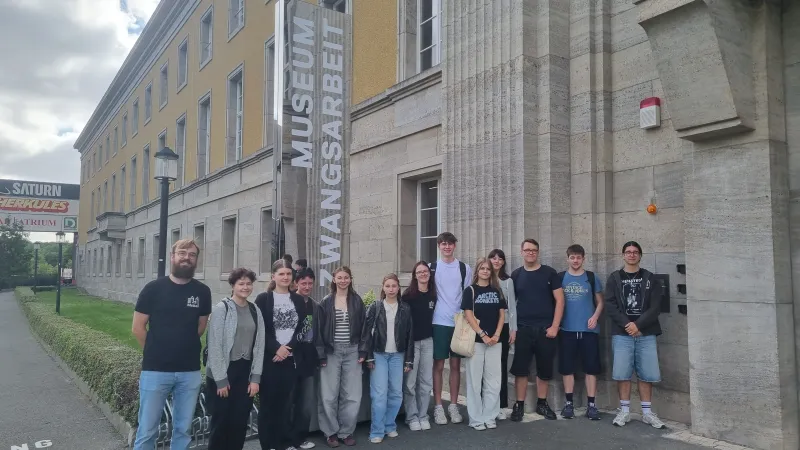
To learn more about this history, the project group visited the Buchenwald Concentration Camp Memorial and the Museum of Forced Labour in Weimar.
The study visits included guided tours and educational programmes by expert staff. It provided the group with important knowledge to better contextualize the history of the concentration camp system and forced labour under National Socialism both within Germany and the occupied countries.
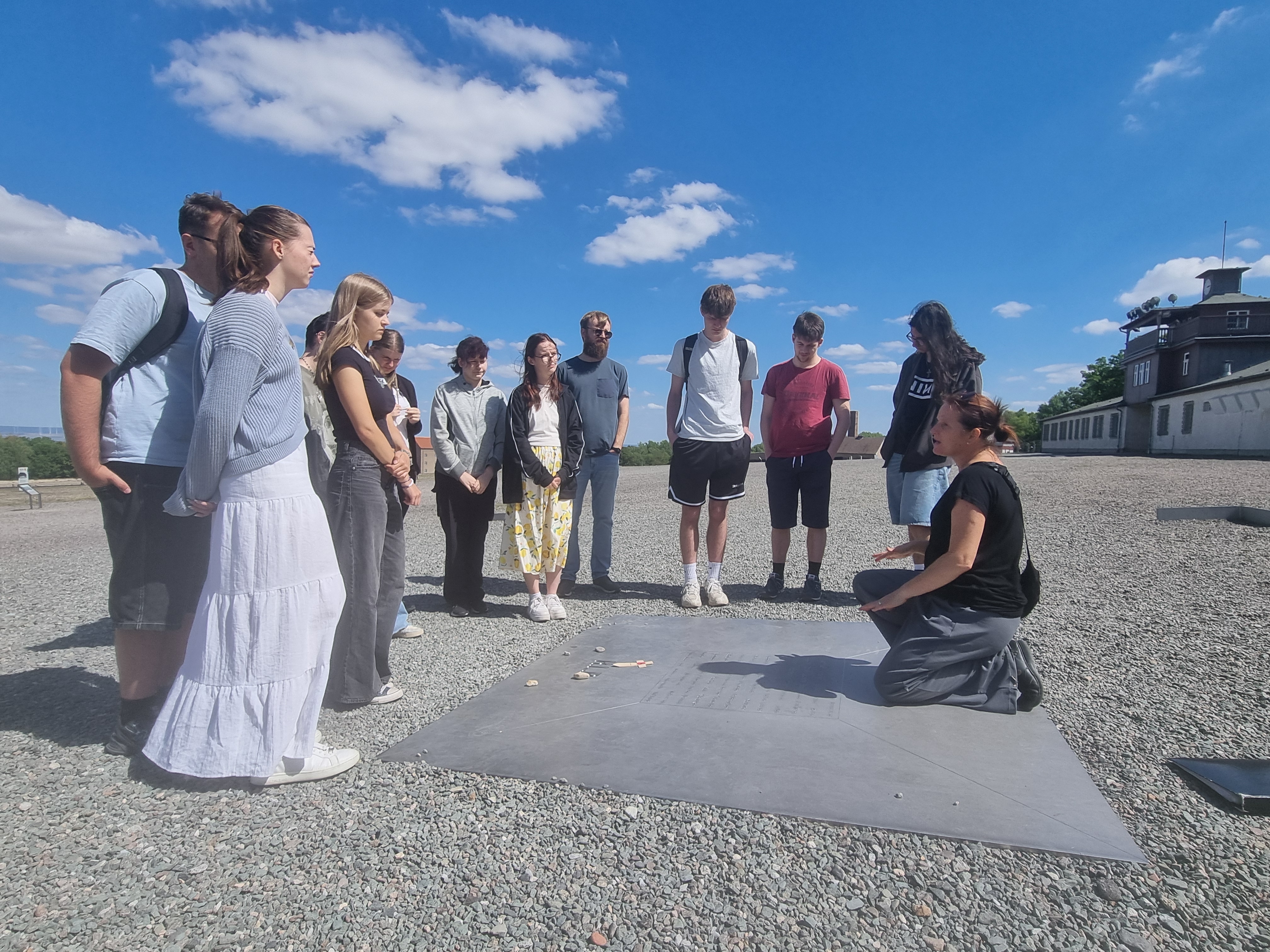
18 August 2025 – the project group at the Memorial to all the dead of the Buchenwald Concentration Camp on the former roll call square. The gate building is in the background. © Langenstein-Zwieberge Concentration Camp Memorial
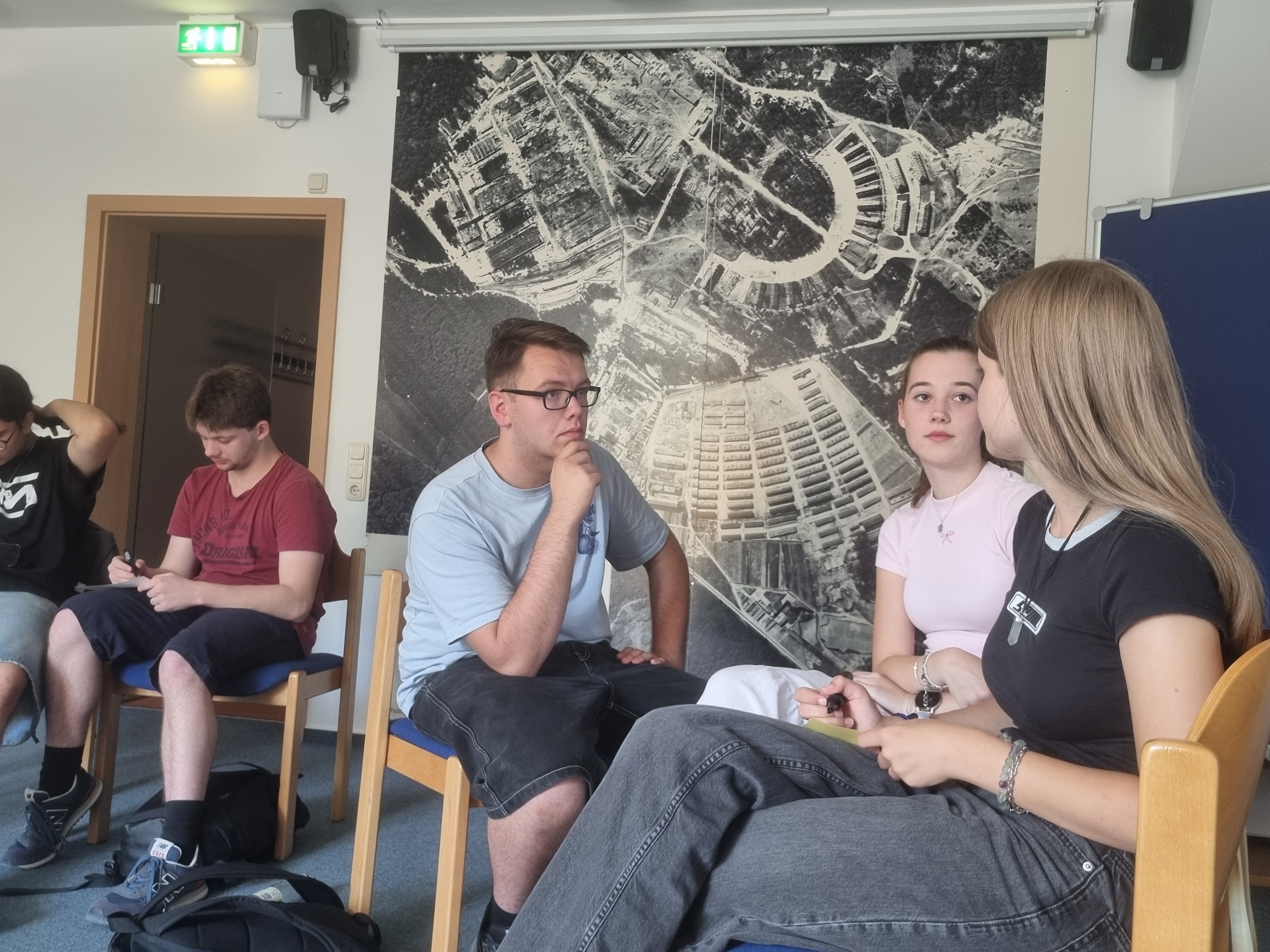
18 August 2025 – evaluating the study visit. The areal photograph in the background shows Buchenwald Concentration Camp in 1945. © Langenstein-Zwieberge Concentration Camp Memorial