

Croatian ambassadors first meeting - March 25 2026
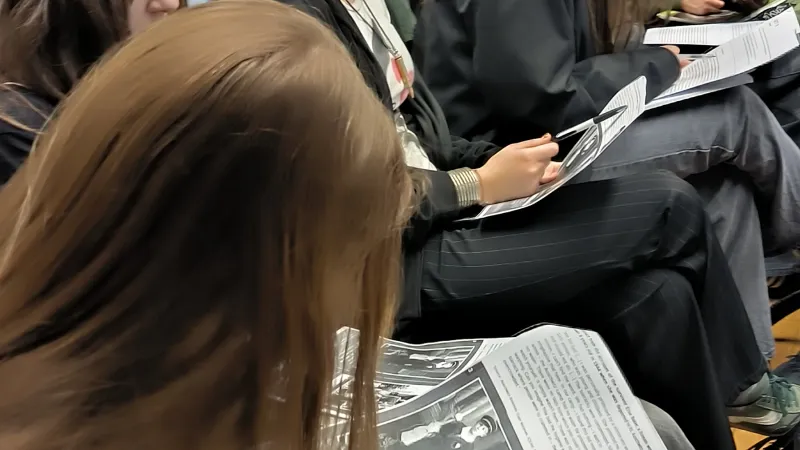
On 25 March, the Croatian ambassadors held their first meeting with participating students to introduce the NESHAMA project and its objectives. During this introductory session, students were informed about the programme’s upcoming activities, including a series of online lectures and an educational visit to the Jasenovac Memorial Site.
The first online session, scheduled for 6 May, was planned in collaboration with students from the Educational Centre at the Jasenovac Memorial Site, who would participate alongside their teacher and the national project coordinator.

Following the online lecture, Introduction to European Holocaust History, participants were to attend a guided visit to the memorial site, including the museum and an educational programme focusing on the Holocaust in the Croatian context, thereby linking local history with the broader European perspective promoted by the NESHAMA project.
As part of the project’s research activities, students were divided into two working groups to investigate the lives of two Zagreb teachers who became victims of the Holocaust: Ivo Frolo, a former teacher at their own school, and Ivana Nanette Hirschmann, the first female physical education teacher for girls in Croatia and author of the country's first physical education manual for girls.
Each group was further divided into subgroups responsible for historical research, film design, and film production. Students conducted their research using reliable historical resources, including national encyclopaedias and biographical lexicons, while also consulting the Croatian School Museum and local library collections for additional archival material.
Through this work, participants were expected to deepen their understanding of the lives and contributions of educators whose persecution and murder represented a profound loss for Croatian society and education.
By engaging with the personal histories of respected local figures who were targeted solely because they were Jewish, students were encouraged to develop a more personal understanding of the Holocaust while strengthening the historical knowledge and critical engagement required to become committed Young Ambassadors of remembrance, in line with the objectives of the NESHAMA project.
The results of the research will be presented at a later stage of the project.